


Silikon NFC Armband JM11
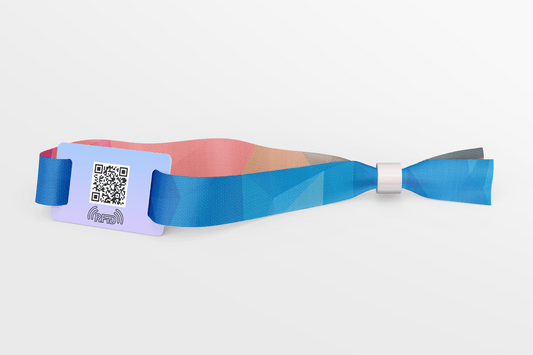
Stoff Identifikatioun Bracelet

RFID Vinyl Armbands
NFC Silicone Wristband JM13
NFC Silicone Wristband JM13
En stock •
Temps de production: 10-18 days
• par pce à partir de
€9,99Hiweis: Dir kënnt de Betrag schreiwen
par pce
€9,99
€11,69
tva incl.
Démarrage
€55,00
€64,35 tva incl.
Total
tva incl.
Silikon NFC Armband JM11
Stoff Identifikatioun Bracelet
RFID Vinyl Armbands
- Liwwerung 10-18 days
- Präisgarantie -5%
- Bezuelbare Versand
Produit Presentatioun
Produit Presentatioun
NFC Silicone Wristband JM13
Durable NFC silicone wristband for access control, member identification, and contactless payment.
JM13 is developed for environments with many users and daily use. The durable silicone wristband combines comfort with a stable NFC solution, making it easy to manage access, register members, or handle payment at events and facilities.
Features
- Material: Durable and flexible silicone for daily use
- Format / Size: 157 mm (XS), 167 mm (Child), 184 mm (Youth), 195 mm (Woman), 206 mm (Man), 215 mm (XL), 228 mm (XXL)
- Print / Marking: Can be printed with designs, text, logo, or QR code
- Chip Options: FM1108, MiFare Classic 1K 7B, NTAG 213, MiFare Ultralight EV1
- Production Time: Provided upon order and depends on the selected chip and print
- Delivery: Fast delivery across the EU
- Minimum Order: 50 pcs.
Application
Suitable for swimming pools, fitness centers, schools, associations, and events that require stable access management.
Why JM Band®
JM Band® delivers thoroughly tested NFC and RFID solutions with high quality, technical experience, and fast delivery to customers across Europe.


Hutt Dir déi richteg Quantitéit ausgewielt?
D'Produkt(e) sinn an de Weenchen bäigefüügt.
| Produktiounszäit | 10-18 Deeg |
|---|---|
| Material | Silikon |
| RFID | FM1108 7B — MiFare Classic® 1K 7B — NTAG 213 — MiFare Ultralight® EV1 |
| Befestegungstyp | Kontinuéierlech Schleif |
| Personaliséierung | |
| Zertifikater |
ISO 10993-23:2021


 MSDS (Sécherheetsdatenblat)

|
| Materialtyp | Silikon |
|---|---|
| Nohalteg Elementer | |
| Rëssbeständegkeet | 180.0 N |
| Waasserbeständegkeet | Waasserdicht |
| Faarfbestänegkeet | 7/8 |
| Tragekomfort | |
| Hypoallergen | Hypoallergenic |
| Feierhemmend | Feierhemmend |
| Temperaturbeständegkeet | -40°C bis 150°C |
| CO₂-Foussofdrock | 0.039 kg CO2e |
| Drockmethod | Mat Faarffëllung geprägt |
|---|---|
| Zuel vun de Faarwen | 4 |
| Uewerfläch | Glanz |
| Faarfpalette | Pantone® C |
| Kratzbeständegkeet | Héich |
| Drockbeständegkeet | 180 |
| Drockqualitéit | Standard |
| Technesch Donnéeën | FM1108 7B | MiFare Classic® 1K 7B | NTAG 213 | MiFare Ultralight® EV1 |
|---|---|---|---|---|
| Hiersteller | Fudan | NXP | NXP | NXP |
| Frequenz | 13.56 MHz | 13.56 MHz | 13.56 MHz | 13.56 MHz |
| ISO/IEC-Standard | ISO/IEC 14443A-3 (MIFARE Classic protocol) | ISO/IEC 14443A-3 (MIFARE Classic protocol) | ISO/IEC 14443A (Type A), NFC Forum Tag Type 2 | ISO/IEC 14443A (Type A) |
| Maximal Liesdistanz | 80.0 mm | 100.0 mm | 50.0 mm | 100.0 mm |
| Späicherkapazitéit | 1024 bytes | 1024 bytes | 144 bytes | 48,128 bytes |
| UID-Längt | 7 bytes | 7 bytes | 7 bytes | 7 bytes |
| Dateschutz | Crypto-1 proprietär Chiffréierung | Crypto-1 proprietär Chiffréierung | 32-Bit Passwuertschutz | Keen |
| Lies-/Schreifzyklen | 100000 | 100000 | 100000 | 100000 |
| Zertifikat 1 | |
|---|---|
| Numm | ISO 10993-23:2021 |
| Erausginn vun | Sanitation & Environment Tech. Institute of Soochow University |
| Zertifikatsnummer | SDWH-M202401264-5(E) |
| Beschreiwung | Testbericht fir biologesch Evaluatioun (Irritatioun vun der mëndlecher Schleimhaut). De Silikonkautschukmaterial (Modell TBL-9640, deen TBL-9620 ofdeckt) gouf getest an huet keng Unzeeche vun Irritatioun no den ISO 10993-23:2021 Standarden gewisen. |
| Zertifikat 2 | |
| Numm |
Qualitéitsinspektioun
|
| Erausginn vun | CTL Testing Technology Co. |
| Zertifikatsnummer | CTL2212142011-Q |
| Beschreiwung | Qualitéitsinspektiounsbericht (Inbetriebnahme). Verifizéiert déi kierperlech Qualitéit, d'Chipfunktionalitéit, d'visuellt Erscheinungsbild, d'Häert an d'Verpakung no de Spezifikatioune vum Client. |
| Zertifikat 3 | |
| Numm |
IEC 62321 Serie (RoHS 2011/65/EU)
|
| Erausginn vun | HTT TECHNOLOGY CO. |
| Zertifikatsnummer | HTT191213126R |
| Beschreiwung | D'RoHS-Konformitéitszertifikat bestätegt, datt d'RFID-Handgelenkbänner (inklusiv Silikon-, ABS- a PVC-Modeller) der RoHS-Direktiv 2011/65/EU an (EU) 2015/863 entspriechen. Getest no den IEC 62321-Seriestandarden, fir sécherzestellen, datt limitéiert Substanzen (wéi Blei, Quecksëlwer, Cadmium) bannent de gesetzleche Grenzen bleiwen. |
| Zertifikat 4 | |
| Numm |
EN ISO 7816-8:2021
|
| Erausginn vun | Integra96 Int. |
| Zertifikatsnummer | TTC-22-2911/14/02 |
| Gëlteg bis | 29. Nov 2027 |
| Beschreiwung | Dëse Standard spezifizéiert déi technesch Befeeler, déi fir Sécherheetsoperatiounen an Smart Cards (Integrated Circuit Cards) benotzt ginn. En definéiert d'Protokoller fir kryptographesch Berechnungen, digital Signaturen a Benotzerverifizéierung (Authentifikatioun). Am Idealfall gëtt en agesat fir e sécheren Datenaustausch tëscht dem Chip (z.B. an engem Armband) an dem Liesgerät ze garantéieren. |
| Zertifikat 5 | |
| Numm | MSDS (Sécherheetsdatenblat) |
| Erausginn vun | N.G. High-Polymer Material Co. |
| Zertifikatsnummer | 68037-87-6 |
| Beschreiwung | Sécherheetsdatenblat (MSDS) fir Silikonkautschuk 3160A, deen a Braceletten benotzt gëtt. Bestätegt d'Feele vu Schwéiermetaller, PAKen a Phtalater (16P). |
| Zertifikat 6 | |
| Beschreiwung | D'CE-Markéierung ass eng Erklärung vum Hiersteller, datt e Produkt de Gesondheets-, Sécherheets- an Ëmweltnormen vum Europäesche Wirtschaftsraum (EWR) entsprécht a bannent deem fräi verkaaft ka ginn. |
| Typ | |
|---|---|
| Kontinuéierlech Schleif | - |
FAQ
An NFC silicone wristband is typically used for access control, identification, and contactless payments. The wristband works as a digital key that can be scanned at readers or terminals, allowing users to quickly access specific areas, register memberships, or make payments without cash or cards. This solution is especially popular in swimming pools, fitness centers, schools, festivals, and events where many people need to be managed efficiently. When users simply scan their wristband, queues and administrative work are reduced, creating a smoother experience for both guests and staff.
The NFC Silicone Wristband JM13 can be supplied with several different chip types to match the access control or payment system already in use. The most common options include FM1108, MiFare Classic 1K 7B, NTAG 213, and MiFare Ultralight EV1. The choice of chip depends on system compatibility and the functionality required. Some chips are primarily used for access control systems, while others are suitable for simpler identification or payment solutions. At JM Band® we are happy to help you select the right chip to ensure the wristband works reliably with your existing system.
Yes, the JM13 can be customized with printing so the wristband matches your brand or event. Logos, text, color codes, or QR codes can be printed directly on the wristband, making it both practical and visually recognizable. The print can also serve a functional purpose, such as identifying different access levels, membership categories, or VIP areas. This means the wristband works not only as a technical access tool but also as a visible part of the identity surrounding your event, facility, or organization.
Yes, NFC silicone wristbands are designed for environments with many users and frequent daily use. Silicone is a flexible and durable material that withstands water, sweat, and repeated use without losing comfort or functionality. This makes the wristband ideal for locations such as swimming pools, fitness centers, wellness facilities, and sports venues where users often wear the wristband for extended periods. At the same time, the wristband stays securely on the wrist, reducing the risk of lost access cards and making the solution practical in busy environments.
-

Bracelet personnalisé
Mir hunn zefridden Clienten JM Band® bitt flexibel Braceletléisungen fir Eventer a...
-

Jeton personnalisé
Jeton personnalisé pour une gestion efficace des invités Les jetons personnalisés sont...


